Moving to Florida or splitting time between states? Keeping up TRT treatment
By Chad Barnsdale · Updated 2026-07-27
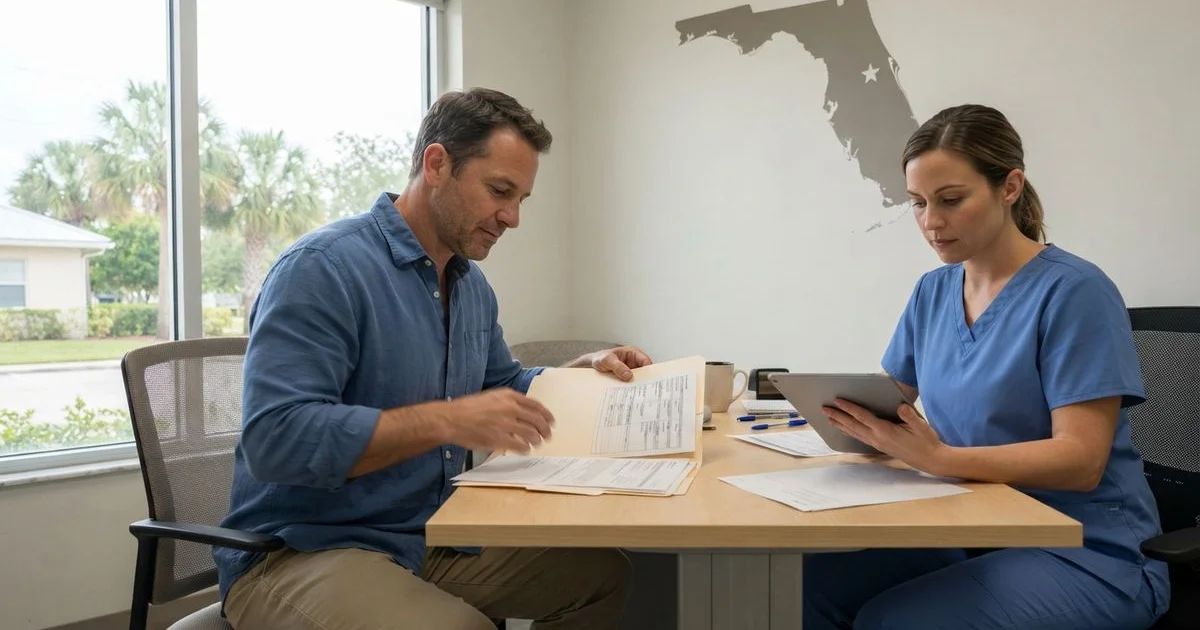
Relocating, whether permanently or as a seasonal Florida resident, is one of the more common reasons TRT treatment gets interrupted, not because the medicine stops working but because the paperwork and provider relationship do not automatically follow you. A little planning ahead avoids a gap you would otherwise notice.
Before you move: the checklist
| Task | Why it matters | Timing |
|---|---|---|
| Request your medical records and recent labs | New provider will want your history and baseline numbers | 4–6 weeks before moving |
| Time your last fill | Avoid running out during the transition | 2–4 weeks of buffer supply |
| Start researching Florida providers | Establishing care can take a few weeks | As soon as your move date is set |
| Check insurance network changes | Your plan’s in-network providers may change with your address | Before your first Florida appointment |
Why you generally cannot just keep your old provider
Prescribing rules are tied to where you are physically located when the prescription is written, not where your provider is based. That means an out-of-state provider generally cannot keep prescribing once you have relocated to Florida, even if they know your case well. Telehealth TRT programs can sometimes bridge this if the provider is licensed in Florida or holds a recognized telehealth registration, but the same location rule still applies.

If you split time between two states
Snowbirds and part-year residents face a slightly different version of this problem: your provider needs to be able to legally prescribe to you wherever you happen to be when a new prescription is written. Some telehealth programs are licensed across multiple states specifically to handle this, which is worth asking about directly if you regularly move between Florida and another state during the year.
Getting your new provider up to speed quickly
Bring your recent labs, current dose, and a summary of how you have responded to treatment to your first Florida appointment. Most providers will still want their own baseline bloodwork, but having your history on hand shortens the get-to-know-you phase and helps your new provider pick up roughly where your last one left off rather than starting completely from scratch.
Do not wait until you run out
The single most avoidable problem here is running low on medication before you have established care in Florida. Start the process, records requests, provider research, insurance check, as soon as your move date is confirmed. How smoothly a clinic handles new patients transferring care is one of the things weighed in our published methodology for ranking Florida providers, telehealth options included.
Common questions
- Can I keep seeing my old provider after moving to Florida?
- Generally no, unless they are licensed in Florida or the visit is handled through a telehealth arrangement that meets Florida's requirements. Most people need to establish care with a Florida-licensed provider after relocating.
- How do I avoid running out of medication during a move?
- Time your last fill with your old provider so you have enough supply to cover the transition, and start the process of establishing care in Florida before you actually run low, not after.
- Do I need new bloodwork if I switch providers?
- Usually yes, even with recent labs in hand. Most new providers want their own baseline confirmation, though recent results can sometimes shorten the process if your new clinic accepts outside labs.
- Is telehealth a good option if I split time between two states?
- It can be, but your prescriber generally needs to be licensed in whichever state you are physically located in when the prescription is written, so confirm this covers both of your locations before relying on it.